 Marcus
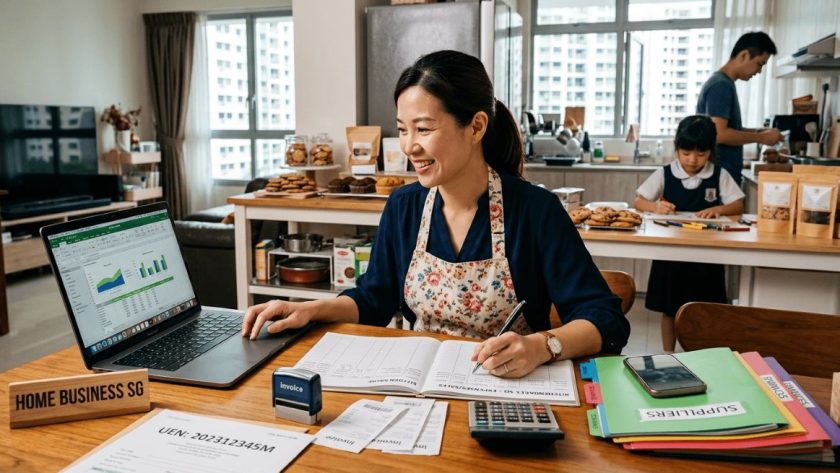
 Running a business from your HDB flat while keeping two kids fed, homework checked, and dinner on the table is not a small feat. Thousands of Singapore parents are doing exactly that. Some bake custom cakes for weekend orders. Others run online tutoring sessions after school drop-off. Many do consulting work during nap times and late evenings. The business part is manageable. The bookkeeping part? That is where most parents quietly struggle, usually until tax season arrives and panic sets in.
What You Will Take Away From This Article
- How to tell if your home business is genuinely profitable, not just busy
- Why cash flow matters even when your income looks healthy on paper
- The difference between an invoice and a receipt, and when to send each
- Simple tools that replace messy spreadsheets for home-based business owners
- How to prepare for Singapore tax obligations without a hired accountant
The Home Business Boom Among Singapore Parents
The shift started well before recent years. Singapore parents, especially mothers, have been quietly building side incomes that eventually grew into real businesses. The pandemic accelerated this. A tutor who once commuted to students’ homes now runs virtual classes for 20 families. A home baker who posted on Instagram casually now has a waiting list two months long.
According to Singapore’s Ministry of Manpower data, self-employment among residents has been on a steady rise. Many of these self-employed individuals are parents who need the flexibility of working around school hours. The upside is obvious. The downside is that most of them never expected to become business owners, and very few started with a finance background.
That means the books often get done in messy Excel files, WhatsApp screenshots, and a pile of paper receipts stuffed in a drawer. That is not a judgement. It is just where most home businesses start. The question is how to get more organised without dedicating hours you do not have.
Knowing If Your Business Actually Makes Money
This sounds obvious. Of course you know if you are making money. But many home business owners confuse revenue with profit. You might bring in $3,000 a month from baking orders. But if ingredients cost $1,200, packaging is $300, delivery is $400, and your gas bill went up $150 because of oven use, your actual profit is closer to $950. That changes things quite a bit.
A clear picture of income versus expenses is what separates a sustainable business from one that keeps you busy but not financially ahead. The most useful tool here is a proper P&L statement. It lays out every dollar that came in and every dollar that went out, over a defined period, so you can see the actual number at the bottom.
Many parents skip this because it sounds complicated. It does not have to be. Using a ready-made template, you fill in your income categories at the top, your costs in the middle, and the math does itself. Doing this monthly is ideal. Quarterly is better than never.
Once you have your P&L working, the next useful step is running a profit margin tool on your numbers. It tells you what percentage of each sale you actually keep. A home baker keeping 25 cents of every dollar is in a very different position than one keeping 60 cents. Knowing that number helps you decide whether to raise prices, reduce costs, or rethink the whole product mix.
Proper freelancer bookkeeping tools also make this process less painful. Rather than manually entering figures into a spreadsheet week after week, purpose-built platforms record transactions automatically, categorise expenses, and generate reports on demand.
Keeping Cash Ready Before Clients Pay
Profit and cash are not the same thing. A parent running a tutoring centre might have $10,000 in confirmed revenue for the month. But if clients pay at the end of the month and class supplies need to be purchased at the start, there is a real gap in the middle. That gap is a cash flow problem, even if the business is technically profitable.
This is why keeping an eye on working capital matters so much for home businesses. Working capital is the difference between what you are owed (accounts receivable) and what you owe to others (accounts payable), plus what you have on hand. When this number is tight, you can find yourself scrambling to pay for ingredients, materials, or platform fees before your next payment arrives.
A simple working capital tool lets you input what you have, what you are owed, and what you owe, so you can see at a glance whether your buffer is healthy or dangerously thin. For parents managing both household budgets and business cash, this visibility is genuinely useful.
Keeping business and personal finances separate is also worth emphasising here. It is tempting to use one account for everything when you are just starting out. But mixing funds makes it very hard to know whether the business is covering itself or quietly relying on personal savings to stay afloat. A dedicated business account, even a basic one, changes that picture entirely.
Tracking where money goes is equally important. Using structured expense claims means every business purchase, from printer ink to delivery fees, is recorded and categorised. This matters at tax time too, since many of these costs are deductible.
What to Send Clients: The Document Question Most Parents Get Wrong
This is one of the most common points of confusion for parents who are new to running a business. A client pays you for a birthday cake. You send them a document. But which one? A quote? An invoice? A receipt? Are they all the same thing?
They are not, and getting this wrong can cause real friction with clients or create problems if you ever need to prove your income. The short version: a quote is sent before the work is done, to confirm the price. An invoice is sent after the work is done or when payment is due, requesting payment. A receipt is sent after payment is received, confirming the transaction is complete.
The full breakdown, including when each document applies and what it should contain, is covered clearly in this invoice vs receipt guide. For a parent who has been informally sending “payment confirmations” via WhatsApp, reading this once will immediately tighten up how they handle billing.
Sending proper invoices also signals professionalism. Clients who receive a well-structured invoice are more likely to pay on time. They also take the business more seriously, which matters when you are building a reputation through word of mouth, which is how most home businesses in Singapore grow.
One helpful resource here is a good get paid faster workflow, which covers everything from invoice timing to follow-up reminders. It sounds small, but reducing the average time between invoice and payment by even a few days improves cash flow significantly over the course of a year.
Five Documents Every Home Business Parent Should Have Ready
Getting organised does not require a complicated system. It requires having the right documents ready to use consistently. Here are five that matter most:
- A profit and loss template. Updated monthly or quarterly to show whether the business is genuinely profitable after all costs are counted.
- A client invoice template. Pre-formatted with your business name, payment details, and itemised service description so you never send a sloppy message asking for payment.
- An expense log. A simple running record of every business-related purchase, categorised by type, saved with receipts where possible.
- A cash flow forecast. Even a rough one, showing what you expect to earn and spend over the next one to three months, helps you spot gaps before they become problems.
- A tax summary. A yearly record of income, deductible expenses, and any GST-relevant transactions, ready well before the IRAS filing season begins.
Handling the Tax Side Without Losing Your Mind
Singapore’s tax system is relatively straightforward for sole proprietors, but many home business parents still find it stressful simply because they have not kept records throughout the year. When filing time arrives, they are reconstructing months of income from old bank statements and half-remembered orders.
The solution is not to become a tax expert. It is to keep clean records as you go. Running a basic self-employment tax calculation periodically gives you a rough sense of what you might owe at year end, so you are setting aside the right amount rather than facing a surprise bill.
It also helps to know which business expenses are deductible under Singapore’s Income Tax Act. Ingredients for food businesses, software subscriptions used for work, home office utilities (partial), equipment, and professional fees are common examples. An accounting checklist tailored to small businesses helps you confirm you are not missing anything before you file.
There is also the GST threshold to be aware of. Once your taxable turnover exceeds $1 million in a 12-month period, GST registration becomes compulsory. Most home-based parents are nowhere near that figure, but it is worth knowing. If you are approaching it, the rules around registration, collection, and filing become relevant.
Tools That Fit Around a Parent’s Schedule
The best bookkeeping system is the one you will actually use. For parents with packed days, that means something simple, accessible on a phone, and not requiring hours of setup. Modern platforms built for solo operators and small business owners meet this standard. They connect to your bank, categorise transactions automatically, and generate reports you can review in minutes.
Many of these platforms also include features that support growth. As your home business scales, you might need to track multiple income streams, manage a part-time assistant, or send invoices in different currencies. Choosing solopreneur tools that grow with you prevents the need to switch platforms every time the business changes.
The key features worth looking for include:
- Automatic bank transaction import and categorisation
- Invoice creation and payment tracking in one place
- Expense logging with receipt capture via mobile
- Profit and loss report generation on demand
- Basic cash flow visibility without needing an accountant
- Singapore tax-friendly reporting formats
If you have been relying on spreadsheets and finding them increasingly hard to maintain as the business grows, purpose-built accounting tools are genuinely worth the shift. The time saved each month adds up fast.
From Side Income to a Business That Pays You Back
The parents doing this well are not necessarily the ones with the most revenue. They are the ones who know their numbers. They know what they earn, what they spend, what they owe, and what is left over. That knowledge lets them make real decisions, like whether to take on more orders, raise prices, hire part-time help, or scale back for a season.
Getting there does not require a degree in finance or hiring an accountant from day one. It requires a solid P & L statement used consistently, a clear understanding of cash flow gaps, and clean invoicing habits from the start. Those three habits alone move a home business from chaotic to controlled.
Singapore parents are proving every day that you can build a real business around school runs and bedtime routines. The ones who do it sustainably are the ones who treat the money side with the same care they give to everything else. And that starts with actually knowing what the numbers say.